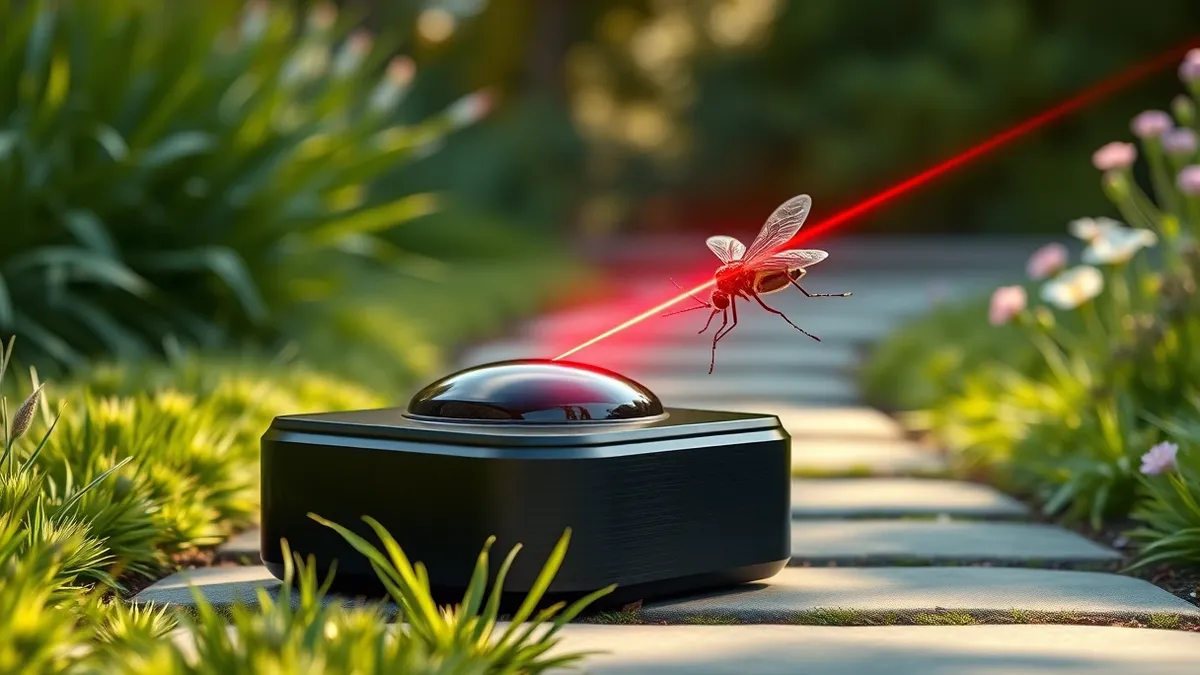
according to the published report, a Chinese start-up has developed a device designed to kill mosquitoes using artificial intelligence and lasers.reported This development highlights the intersection of pest control technology and automated targeting systems.A company in China made a machine that uses smart software and lasers to zap mosquitoes.A Chinese entity has engineered an automated ablation system using AI classification and laser emitters for vector control.
The claim
The start-up has built a machine that identifies and eliminates mosquitoes through the combined use of artificial intelligence and laser technology. The system is described as a functional device rather than a theoretical concept.
The response
The reporting highlights safety concerns associated with the device. Specifically, there are worries about potential harm to people and other creatures that may be near the device when it is in action.
The practical upshot
The technology exists as a developed device, but its operational safety profile remains a point of contention.
Claims versus evidence
The source material confirms the device uses artificial intelligence and lasers to kill mosquitoes. The safety concerns are stated as worries for people and creatures nearby, but no data on injury rates or mitigation strategies is offered. The evidence is limited to the existence of the device and the reported concerns.reported
Why it matters
- Product teams integrating AI with physical actuators must account for collateral safety risks to humans and animals.
- Automated targeting systems require rigorous validation to ensure they do not harm non-target entities in proximity.
- The lack of disclosed safety data suggests a gap in transparency for AI-driven hardware products.
- Regulatory scrutiny may increase for devices that combine lethal mechanisms with autonomous decision-making.
Topics: AI, hardware, safety, pest control, China
Updated
For readers
Developers
- Consider safety implications of AI targeting physical objects.
- Verify how systems distinguish between target and non-target entities.
Policy
- Review regulations for AI devices that pose physical risks to humans.
- Assess liability for automated systems that cause unintended harm.
Consumers
- Be aware of potential safety risks from automated pest control devices.
- Look for independent safety testing before adopting new AI hardware.
Ask the article
Local keyword search of this article; no generated answers.Did this article give you the evidence you needed?
Your choice stays on this device. No public tally.Terms in this story
artificial intelligence
Computer systems designed to perform tasks that typically require human intelligence.
lasers
Devices that emit light through optical amplification of stimulated emission.
Questions readers ask
Does this device use machine learning?
The source specifies it uses artificial intelligence, but does not confirm the use of machine learning specifically.
Has the device been released to consumers?
The source states the start-up has developed the device, not that it has been introduced or released.
Are there known injuries from this device?
The source mentions safety concerns but does not report any specific injuries or incidents.
Connected stories
Reading receipt
- A Chinese start-up has developed a device that uses artificial intelligence and lasers to kill mosquitoes.
- The device raises safety concerns for people and other creatures nearby when it is in action.
- according to the published report, these details regarding the emerging technology.
Still open: How does the AI distinguish mosquitoes from other small creatures?
Still open: What safety mechanisms prevent harm to nearby people?